Today, we’re introducing a new identity for MailerPress.
A new logo, a new visual language, a completely redesigned website, and a clearer way of expressing what MailerPress is becoming.
But we didn’t undertake this redesign simply because we wanted something new.
It’s the result of a much deeper evolution that has been happening quietly behind the scenes over the past few years.
When we first started building MailerPress, the idea was relatively simple: we wanted a better way to create and send emails from WordPress. We wanted something that felt native to the platform, modern and enjoyable to use, without forcing WordPress users to move their content, contacts, and workflows into yet another external application.
That idea became a plugin.
Then the plugin became a product.
And gradually, the product became something much bigger than we had originally imagined.
At some point, we realized that while MailerPress had evolved considerably, the way we presented it hadn’t kept up.
It was time to change that.
It started with a simple question
If you run a WordPress website, almost everything already lives in one place.
Your articles are there. Your products are there. Your customers and users are there. Your images, your brand, your forms, and often a significant part of your business are there too.
And yet, when it comes to email marketing, the traditional answer has always been to send all of that somewhere else.
Connect WordPress to an external platform. Synchronize your users. Recreate your templates. Import your products. Copy your content. Manage another interface and another subscription.
Of course, those tools can be incredibly powerful. But we’ve always found it strange to take everything that already exists inside WordPress and rebuild it elsewhere just to send an email.
So the question behind MailerPress was very simple:
What if email could simply be part of WordPress?
Not just an SMTP interface. Not just a basic newsletter signup form. And not a disconnected dashboard pretending to be integrated with WordPress.
A complete email creation and management experience designed around the way WordPress works.
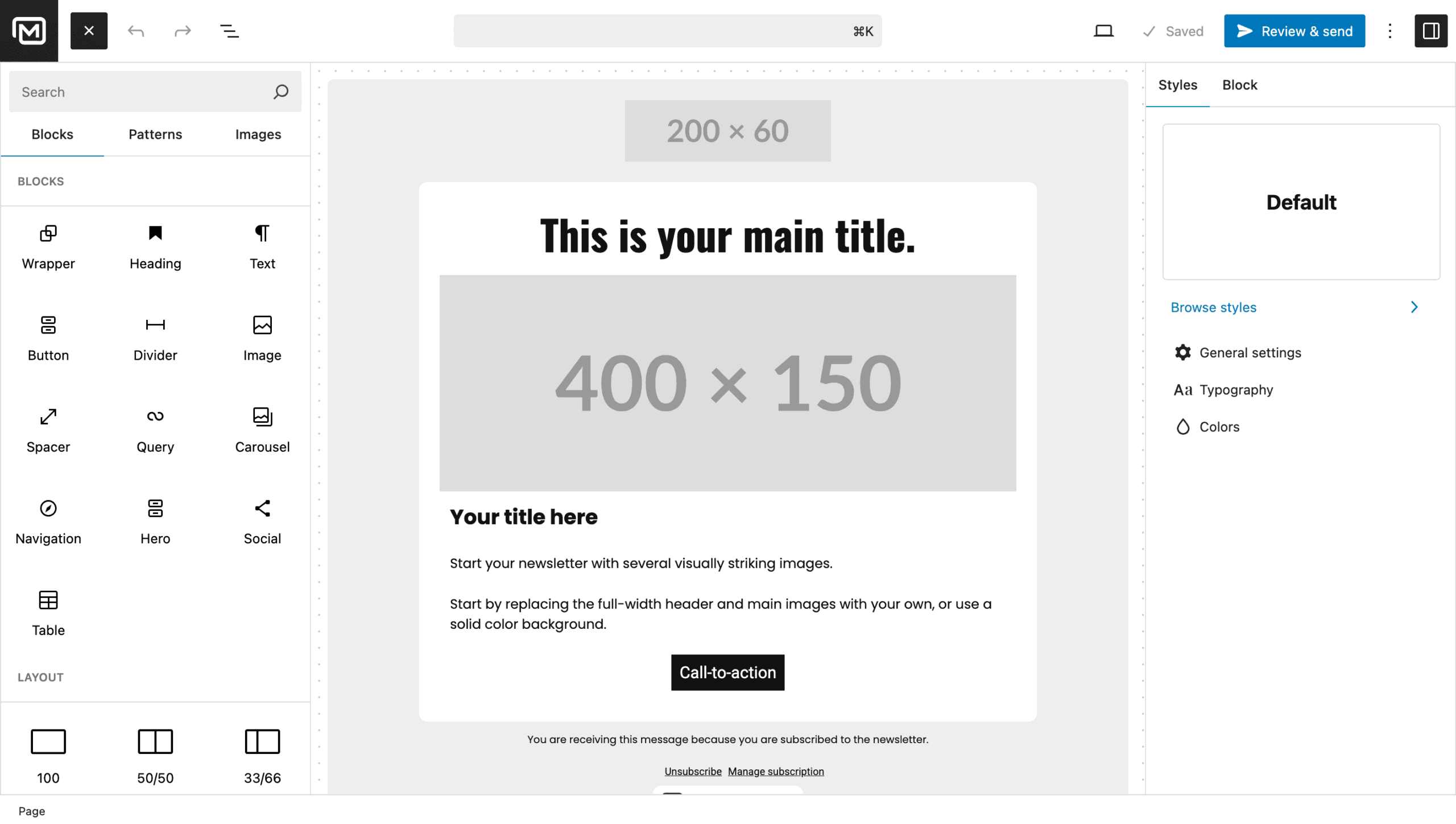
That meant being able to use your own content directly inside an email, query your posts and products, manage subscribers without exporting your database, create campaigns with a familiar visual editor, and choose the infrastructure that sends your emails.
This was the starting point for MailerPress.
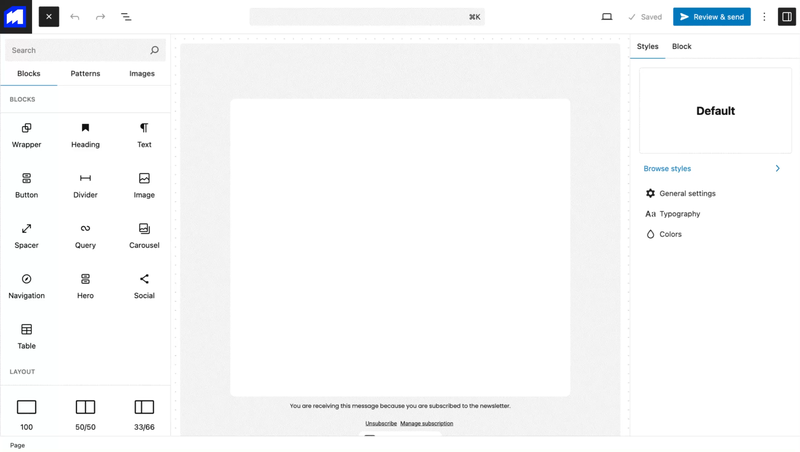
MailerPress in its early days: a much simpler product, built around a much simpler idea.
Then the product started to evolve
Software rarely ends up looking exactly as you imagined it on day one.
You release something, people start using it, they tell you what works and what doesn’t, and suddenly the roadmap you had in your head begins to change.
That happened very quickly with MailerPress.
At first, most of our work revolved around campaigns and the email editor. We wanted to make creating an email inside WordPress a pleasure, while still giving users enough flexibility to build sophisticated layouts and pull dynamic content directly from their site.
Then we improved audience management, lists, tags, and segmentation. We added more sending providers. We expanded the ways MailerPress could interact with WordPress content. WooCommerce became a much more important part of the product.
And eventually, we found ourselves asking a different question.
Why should MailerPress be limited to newsletters?
A WordPress website sends emails constantly. A new account is created. A password is reset. An order is placed. A subscription is renewed. Someone drops out of a journey halfway through. A customer needs to be re-engaged.
Those messages are all part of the same relationship between a website and its audience.
So MailerPress started expanding into those areas too.
With MailerPress 2.0, that evolution became much more visible. We introduced a visual automation system for creating multi-step workflows with conditions and triggers. We added the ability to redesign native WordPress emails and WooCommerce transactional emails using the same visual editor. We expanded segmentation, integrations, and the overall sending infrastructure around the plugin.
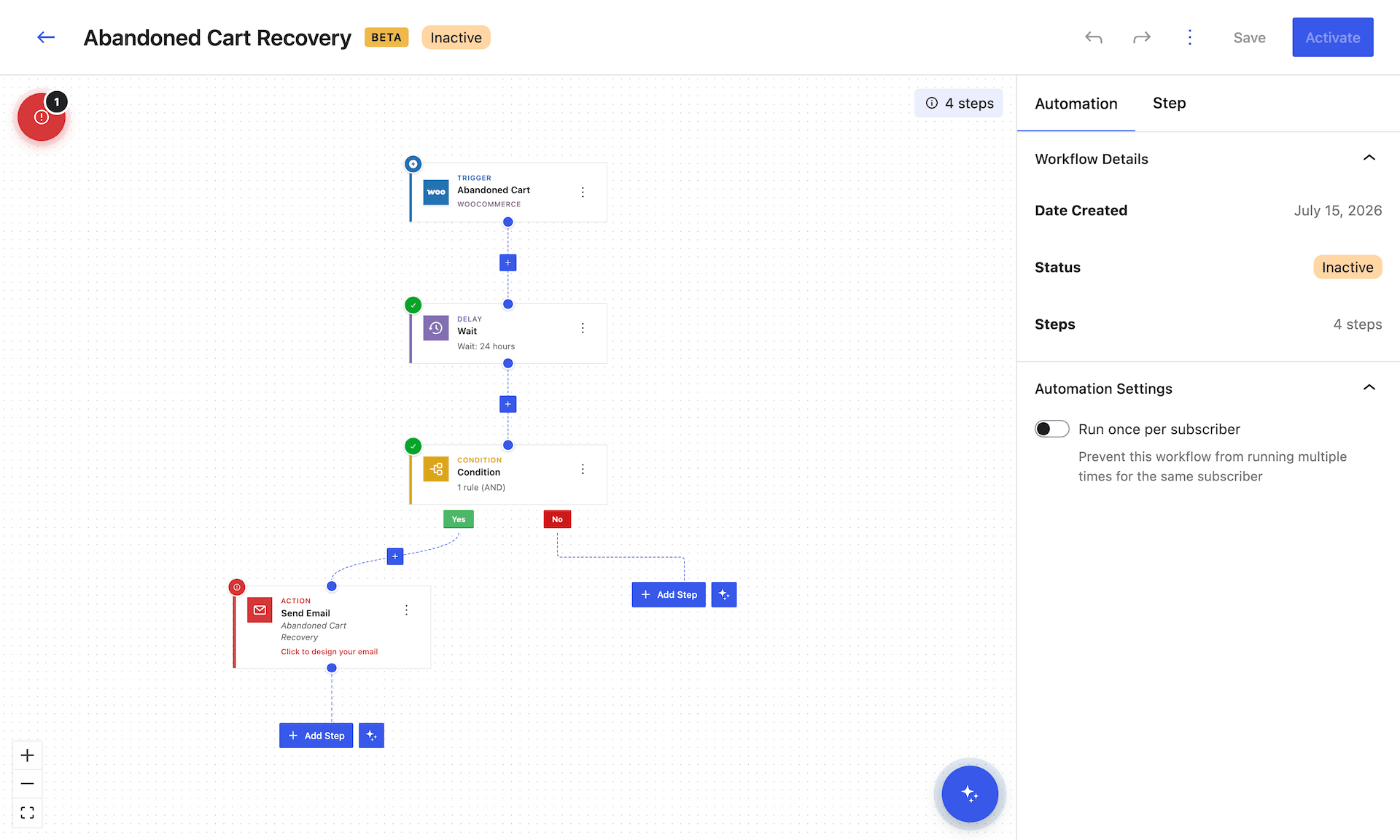
MailerPress was no longer simply becoming a better newsletter plugin.
It was becoming an email platform built around WordPress.
That distinction might sound subtle, but for us, it changed almost everything.
It changed the features we wanted to build. It changed the way we thought about the interface. It changed the problems we wanted MailerPress to solve.
And inevitably, it changed the way we wanted the brand to feel.
The product had evolved. The brand hadn’t.
Our previous visual identity belonged to the first chapter of MailerPress.
There was nothing inherently wrong with it. It helped us launch the product, introduce it to the WordPress ecosystem, and build the foundations of what exists today.
But over time, a gap started to appear.
The product was becoming more sophisticated and more mature, while our visual identity still reflected a much earlier version of MailerPress.
That’s often the strange thing about building a product: because you see it every day, changes happen gradually. You add a feature here, rethink an interface there, adjust the positioning somewhere else. Individually, none of those decisions feels like a major transformation.
Then one day, you compare where you started with what the product has become.
And the difference becomes obvious.
For us, that moment made it clear that simply refreshing a few pages or changing a color wouldn’t be enough.
We needed to rethink the visual system around MailerPress from the ground up.
Finding a visual language for MailerPress
The challenge wasn’t simply to create something more modern.
We wanted the new identity to communicate something very specific about the product.
MailerPress is a technical tool, but we don’t want it to feel technical to use.
It’s a powerful product, but we don’t want that power to translate into complexity.
It lives inside WordPress, but we also wanted MailerPress to have its own recognizable personality rather than simply imitating the WordPress interface.
And above all, MailerPress is about communication.
An email creates a connection between two sides: a website and a person, a business and a customer, a creator and an audience.
That idea of connection became an important part of the thinking behind the new identity.
A logo that stands on its own
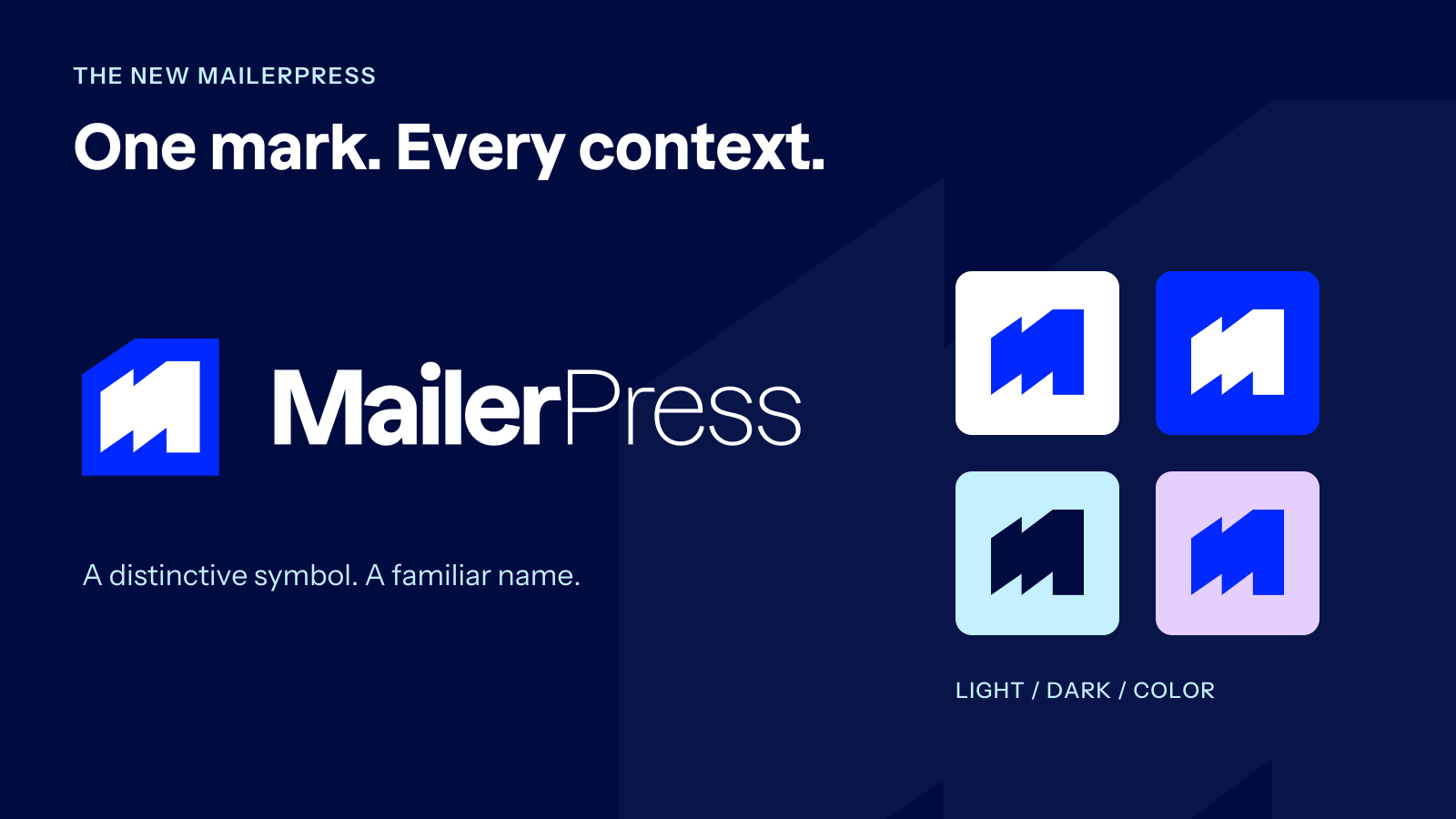
The new logo was designed to be simpler and more recognizable, while giving us a symbol that could exist independently of the MailerPress name.
It needed to work at very different scales: on the website, inside WordPress, as a plugin icon, in documentation, on social media, in videos, and everywhere else MailerPress might appear in the future.
Rather than treating the logo as an isolated graphic, we wanted it to become the starting point for an entire visual language.
A palette with more personality
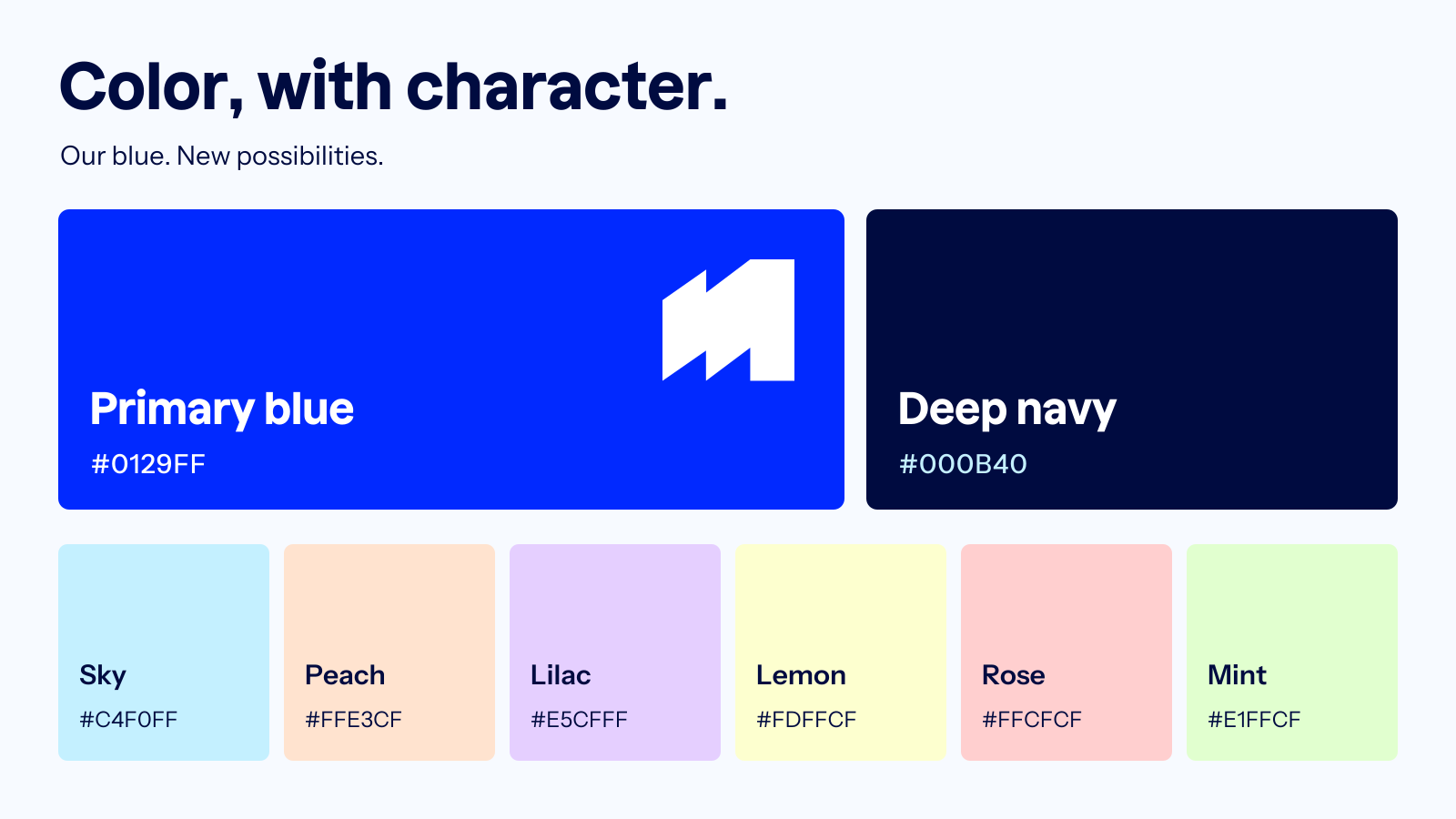
The same thinking applies to color.
Our new palette was designed to give MailerPress a much stronger visual presence while remaining simple enough to work inside the product interface.
The primary blue remains an important part of the brand, but the surrounding palette gives us much more freedom to create contrast, establish hierarchy, and express our personality across the website and future communications.
Typography and a consistent visual system

Typography, illustrations, icons, spacing, and imagery were reconsidered as parts of the same system.
The objective wasn’t to add decoration.
It was to create consistency.
When someone lands on the website, opens MailerPress inside WordPress, watches one of our videos, or sees an announcement from us, it should increasingly feel like part of the same product and the same story.
A new website to explain a more complete product
The redesign also gave us an opportunity to rethink the MailerPress website itself.
Our previous website had grown in much the same way as the product: page after page, feature after feature.
That worked for a while, but as MailerPress expanded, it became increasingly difficult to explain the product through a simple list of features.
Because today, MailerPress isn’t really about any single feature.
Its value lies in how all those pieces work together.
You can collect signups from your WordPress site, organize subscribers into audiences, create campaigns using your existing WordPress content, automate sequences based on actions and conditions, customize the transactional emails your website already sends, and choose how those messages are delivered.
All without leaving WordPress.
The new website was designed around that broader vision.
Rather than simply showing what each button in MailerPress does, we want to better explain what you can build with it.
That also means giving individual parts of the product more room to breathe.
Automations deserve to be presented as a product in their own right. The WooCommerce email customizer deserves its own introduction. The editor, dynamic content, audiences, and sending infrastructure all address different needs while still belonging to the same ecosystem.
The new visual system gives us the foundation to communicate all of this much more clearly.
The identity is changing. The philosophy remains the same.
Although MailerPress looks very different today, many of the principles behind the product remain exactly the same.
We still believe more of the relationship between a website and its audience should be managed inside WordPress.
We still believe users should be free to choose their sending infrastructure instead of depending on a single provider.
We still believe software can offer more possibilities without becoming harder to understand.
And we remain deeply committed to building MailerPress as a native WordPress product.
In fact, those principles matter more now than they did when we started.
Every feature we add creates new possibilities, but also risks introducing unnecessary complexity.
Our challenge for the next chapter of MailerPress is therefore not simply to build more features.
It’s to make all those possibilities easy to use.
When we add advanced automation logic, the interface should make it approachable.
When MailerPress interacts with dozens of WordPress and WooCommerce emails, managing them should still feel intuitive.
When we add more integrations, providers, or targeting options, users shouldn’t need to understand the technical architecture behind them.
The product can become more powerful.
The experience should become clearer.
We want this new identity to embody that philosophy too.
The beginning of a new chapter
A new visual identity can easily be presented as a finished project.
For us, it feels like the opposite.
This redesign gives MailerPress a foundation for what comes next.
There’s still an enormous amount we want to improve. There are parts of the product we want to simplify, others we want to expand, integrations we want to build, and ideas that are still sitting somewhere between a Figma file, a Git branch, and a conversation with one of our users.
And that’s probably the part we’re most excited about.
MailerPress began with a relatively modest ambition: make email marketing better inside WordPress.
Today, we’re thinking bigger.
We want MailerPress to become the place where a WordPress website manages its email relationship with its audience, from the moment someone subscribes to the newsletter, through campaigns and automated journeys, all the way to the transactional messages generated by WordPress and WooCommerce.
One environment.
One audience.
One design system.
All connected to the content and data that already live inside WordPress.
Welcome to the new MailerPress
The logo has changed.
The website has changed.
The visual identity has changed.
But the reason we’re building MailerPress remains the same.
We still want email to feel like a natural part of WordPress.
The difference is that today, we have a much clearer idea of how far that idea can go.
And this new identity is our way of making MailerPress look a little more like the product we’re working to build.
Welcome to the next chapter of MailerPress.